
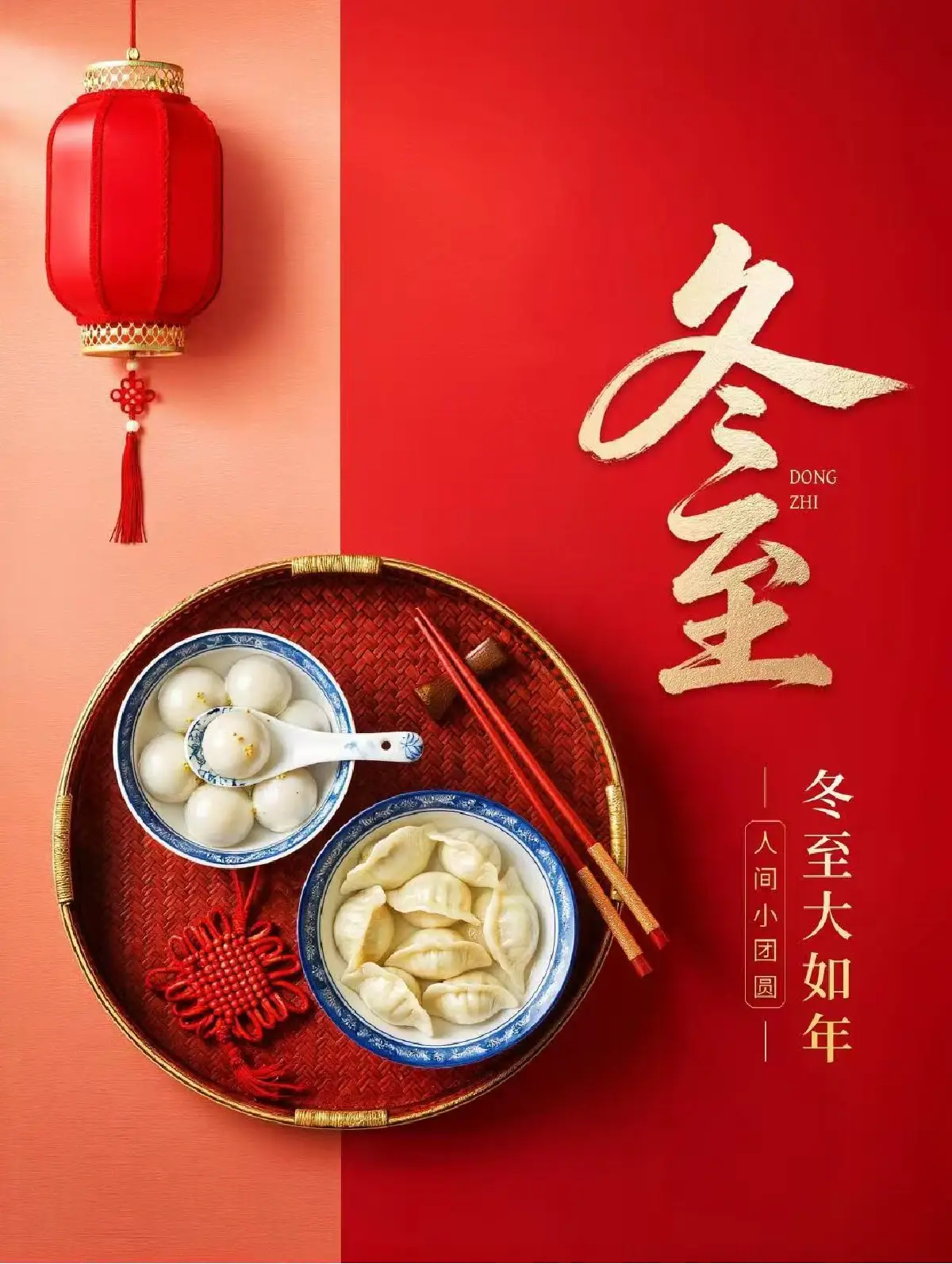
The essence of Dongzhi is captured in its name: “Winter’s Arrival” or, more poetically, “the extreme of winter.” Rooted in ancient Chinese philosophy and agricultural society, it represents the peak of Yin energy—associated with cold, darkness, and stillness. Yet, within this peak lies the seed of its opposite. According to the Yin-Yang principle, from this day forward, the Yang energy of light, warmth, and growth begins its gradual ascent. The sun reaches its lowest point in the sky and “turns back,” promising longer days ahead. Thus, Dongzhi is fundamentally a festival of hope and renewal, a celebration of the universe’s innate balance.
This astronomical event was so crucial that it was used to chart the traditional lunar calendar and guide agricultural cycles. Its importance is echoed globally, from Stonehenge’s alignment to the Roman Saturnalia, reminding us of humanity’s shared awe of the cosmic cycle.
The Heart of the Festival: Rituals of Warmth and Unity
If the solstice is the theory, then its customs are the heartfelt practice. At the core of Dongzhi is the powerful concept of family reunion. As the cold wind blows outside, generations come together indoors, creating a fortress of warmth against the winter.
The most iconic rituals revolve around food, each dish brimming with symbolic meaning:
In southern China and among overseas communities, the making and sharing of Tangyuan (glutinous rice balls) is essential. These colorful, sweet balls, often filled with sesame or red bean paste, are served in a warm, fragrant syrup. Their round shape symbolizes family completeness and unity, while their sweetness wishes for a sweet life. Eating them is believed to add a year to one’s age, a tender nod to growing older together.
In northern China, Jiaozi (dumplings) take center stage. Their shape is said to resemble ancient gold ingots, promising prosperity and good fortune in the coming year. The lively activity of wrapping dumplings together, each pleat a gesture of care, turns the kitchen into a hub of laughter and connection.
Other regional specialties, like mutton soup or Eight-Treasure Rice Pudding, are enjoyed for their warming properties, following the principle of nourishing the body to withstand the cold.
Beyond the feast, some observe the day by honoring ancestors, reflecting on the past year, and offering prayers for health and peace in the year to come.
Dongzhi in the Modern World
In today’s fast-paced, globally connected world, the celebration of Dongzhi has evolved while retaining its soul. For many, it has become a cherished anchor to cultural identity. In bustling metropolises, friends who are like family may gather for a hot pot meal, finding their own version of reunion. Social media fills with photos of steaming bowls of tangyuan or perfectly pleated dumplings, a digital expression of an ancient tradition.
The festival’s core message feels more resonant than ever. In the depth of winter’s darkness, it teaches us to actively create our own light—through connection, through shared meals, and through conscious gratitude. It is a gentle, annual reminder to slow down, to turn inward, and to nurture the relationships that sustain us, much like storing energy for the spring ahead.
A Universal Light in the Darkness
The Winter Solstice, and Dongzhi as its beautiful Chinese embodiment, transcends borders. It speaks a universal language of resilience in the face of darkness and faith in the cyclical nature of life. Whether we observe it by savoring a bowl of tangyuan, lighting a candle, or simply pausing to acknowledge the celestial turn, the solstice invites us all to recognize a simple, profound truth: after the longest night, the light always returns.
And so, as the solstice dusk falls, let us gather. Let the steam from the pot fog the windows, let stories be shared across the table, and let us find, in togetherness, the warmest light to illuminate the longest night.