
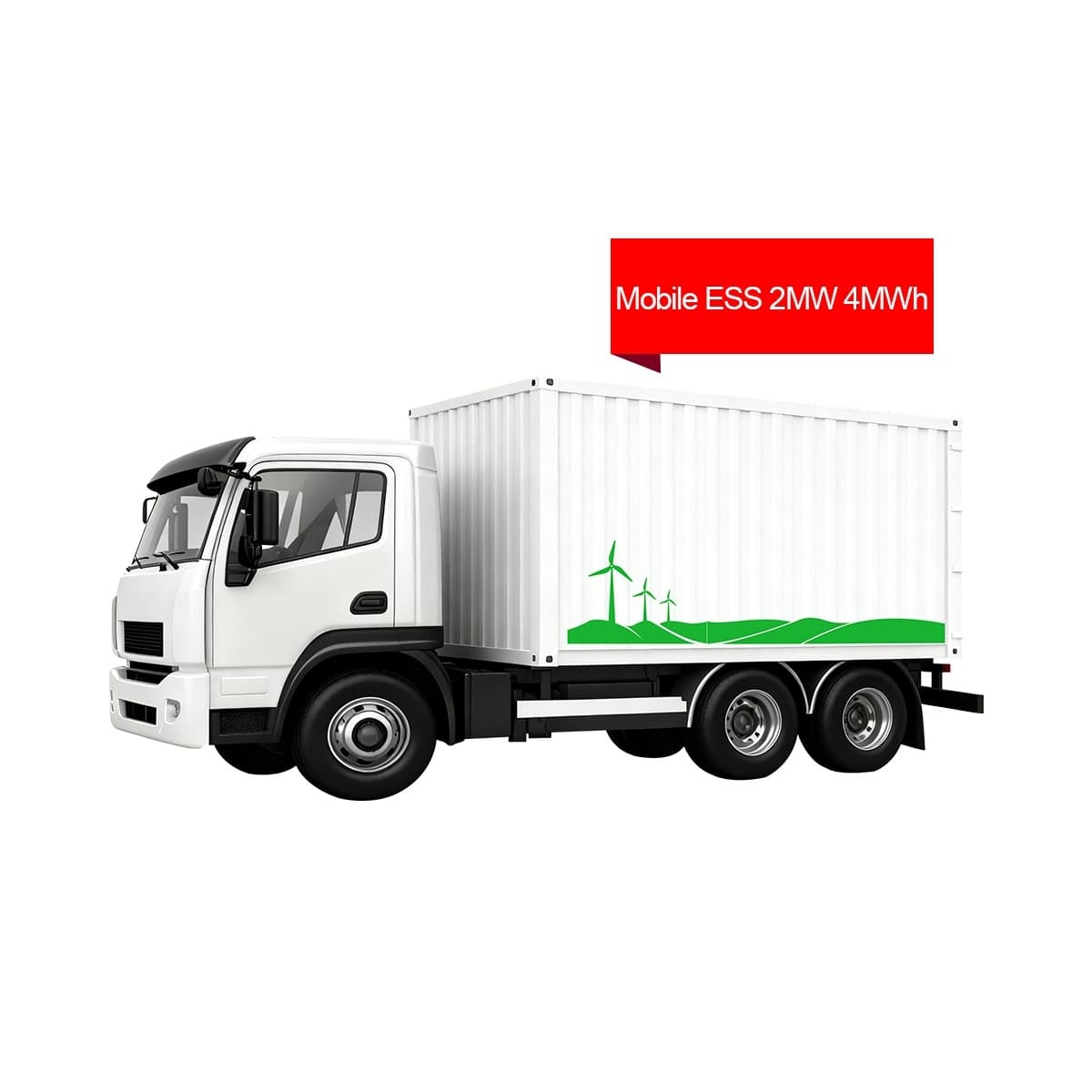
Mobile Battery Storage System – 2MW Power, 4MWh Capacity
Rapid Deployment: Be grid-connected and operational within hours of arrival, not weeks or months.
True Mobility: Easily relocated to different sites as needs evolve, maximizing asset utilization and ROI.
All-in-One Design: Fully integrated with power conversion systems (PCS), cooling, fire suppression, and grid interconnection equipment.
Plug-and-Play Operation: Designed for seamless integration with existing infrastructure via a standardized grid connection interface.
Product Description
Introducing the next generation of flexible power infrastructure: the 2MW / 4MWh Mobile Energy Storage System (MESS) . Housed in a rugged, high-capacity ISO-standard container, this unit combines high-power output with substantial energy capacity, designed to deliver turnkey energy storage solutions wherever they are needed. It serves as a mobile alternative to fixed energy storage systems, offering unparalleled versatility for utility-scale projects, industrial sites, and emergency response scenarios.
True Mobility & Rapid Deployment
Unlike stationary storage units, this system is pre-assembled, pre-wired, and factory-tested. It can be transported via flatbed truck, ship, or rail and is operational within hours of arrival. This eliminates lengthy permitting and civil construction costs associated with permanent installations.
High Power Density
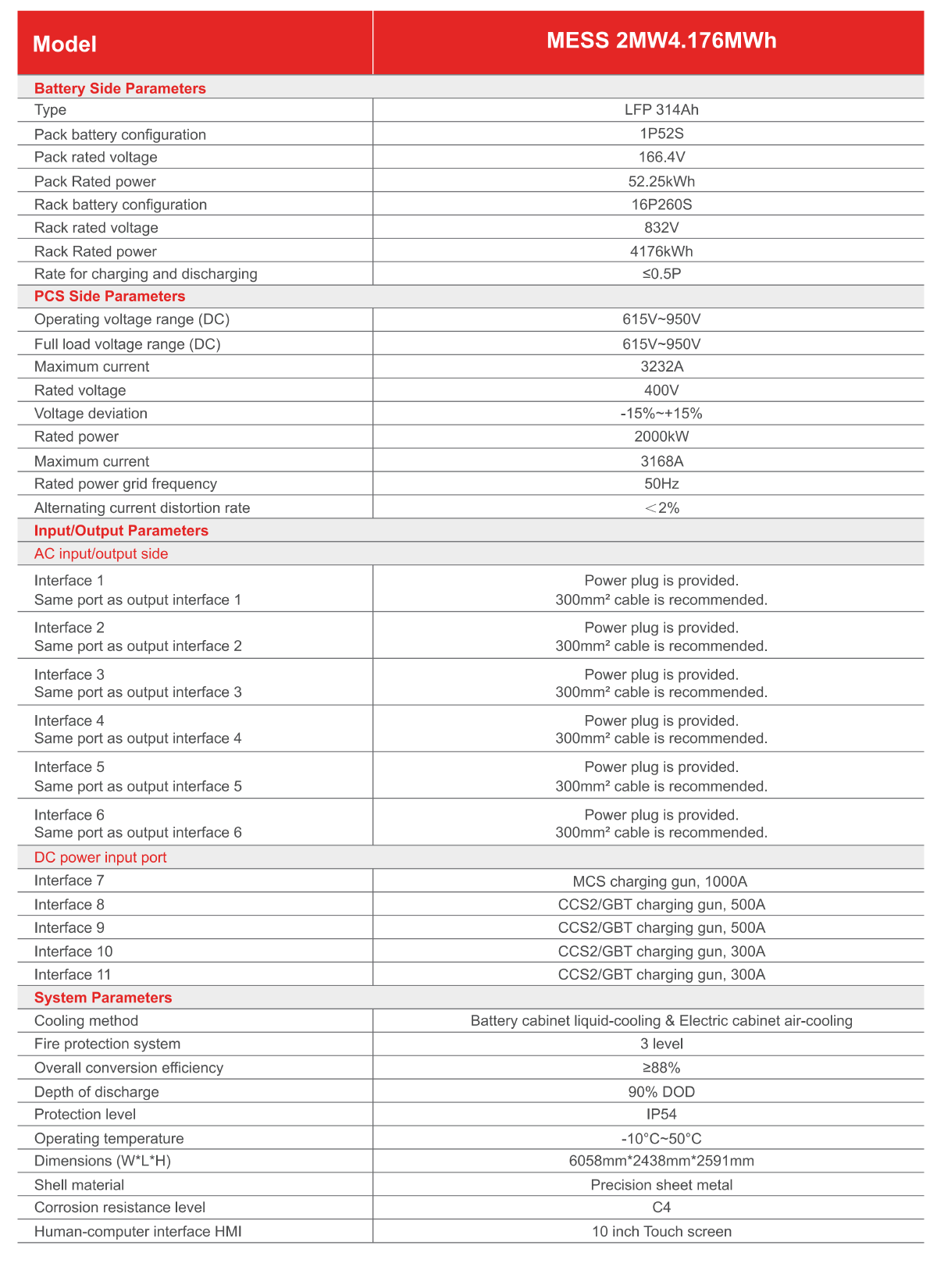
Delivering 2MW of continuous power , this unit is capable of supporting large industrial loads, fast-charging hubs for electric vehicles (EVs), or acting as a grid-forming unit in microgrids. The 4MWh capacity ensures sustained operation, providing 2 hours of full-power backup or extended energy shifting over longer periods at partial load.
Robust Thermal Management
Equipped with an industrial-grade liquid cooling system, the unit maintains optimal battery temperature across extreme environmental conditions (from -20°C to 50°C). This ensures high operational stability, safety, and maximizes battery lifespan even under full-load cycling.
Integrated Safety Systems
Safety is paramount in mobile applications. The container features:
Aerosol or water-based fire suppression systems (compliant with NFPA 855 and UL 9540A standards).
Multi-level insulation and arc-flash protection.
Remote monitoring with automatic disconnect in case of thermal runaway, over-voltage, or over-current anomalies.
Application Scenarios
Utility Grid Support: Peak shaving, frequency regulation, and voltage support for overloaded substations, deferring the need for costly grid upgrades.
Renewable Integration: Smoothing the output of solar and wind farms, shifting generation to high-demand periods.
EV Fast-Charging Infrastructure: Providing grid-independent power for high-speed charging stations, reducing demand charges and enabling charging in remote locations.
Construction & Mining: Supplying silent, emission-free power to heavy machinery and campsites, replacing diesel generators to reduce carbon footprint and fuel costs.
Emergency & Disaster Recovery: Serving as a rapid-response unit for blackouts, natural disasters, or temporary events requiring resilient, silent backup power.
FAQ
It is a utility-scale, containerized battery energy storage system (BESS) mounted on a semi-trailer. With a power output of 2 megawatts (MW) and an energy capacity of 4 megawatt-hours (MWh), it is a fully mobile, plug-and-play asset designed to provide power and energy services wherever needed.
Mobility is the key advantage. It can be rapidly deployed to multiple sites throughout its lifetime, allowing you to address temporary needs, provide emergency power during disasters, support grid congestion in different locations, or defer fixed infrastructure investments. This maximizes asset utilization and return on investment (ROI).
The system is housed in a standard 20-foot high-cube trailer. It is transported by a standard semi-truck to any site with road access. Deployment involves positioning the unit, connecting it to the site’s medium-voltage grid connection point via a supplied cable, and commissioning—a process that can be completed within a few hours to a day with proper site preparation.