
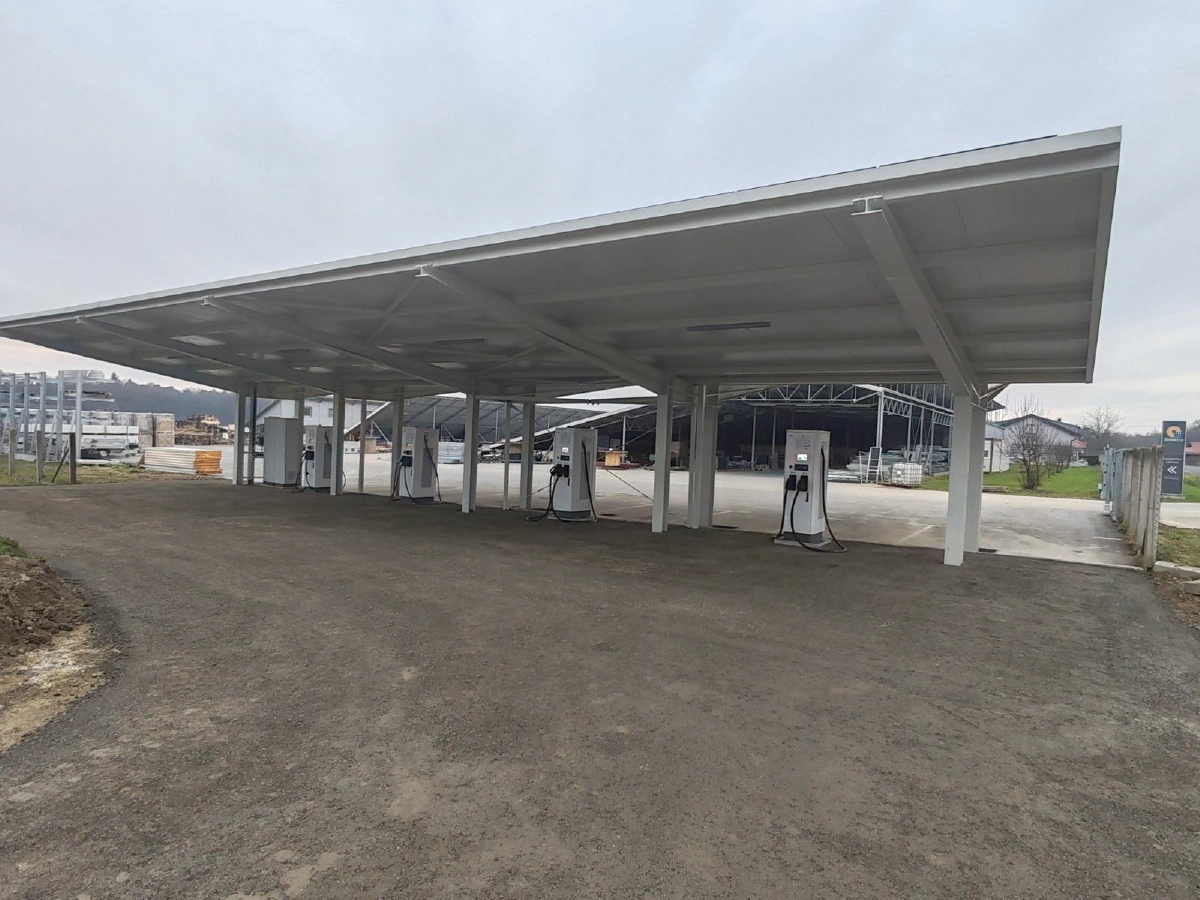
The successful deployment of a four-unit 120kW Direct Current Fast Charging (DCFC) station in a high-traffic urban parking lot. The project addresses the critical need for reliable, rapid electric vehicle (EV) charging infrastructure, supporting the transition to sustainable transportation. By installing four state-of-the-art 120kW chargers, the site now provides a convenient and future-proofed charging solution, significantly reducing vehicle dwell time and increasing customer satisfaction.
The parking facility faced several challenges common to urban areas:
Limited Access to Fast Charging: Area EV owners lacked convenient, public-access options for rapid charging, creating “range anxiety” and discouraging longer visits.
Inefficient Use of Space: Slow Level 2 AC chargers led to prolonged parking occupancy, reducing turnover and potential revenue from parking fees.
Future-Proofing Needs: With EV models offering larger battery capacities, existing charging infrastructure was becoming obsolete, unable to deliver a meaningful charge in a practical timeframe (30-60 minutes).
Demand for Reliability: Drivers required a trusted, always-on network with robust hardware and seamless payment systems.
The project involved the installation of four 120kW DC Fast Charging units, strategically positioned for easy access and efficient use of space.
Featured Product: 120kW Dual-Port DC Fast Charger
High-Speed Performance: Delivers up to 120kW of power per unit, capable of adding approximately 300-400 kilometers (200-250 miles) of range per hour of charging, depending on the vehicle. This enables a typical charge session (10%-80% State of Charge) in 20-40 minutes.
Dual Charging Flexibility: Each unit features two independent charging cables (CCS1 and CCS2/CHAdeMO, depending on regional standard), allowing two vehicles to charge simultaneously at intelligent power sharing. This maximizes infrastructure utilization.
Robust & User-Centric Design: Built for 24/7 outdoor operation with an IP54 or higher rating for dust and water resistance. Features include:
A vibrant, intuitive touchscreen interface.
RFID, QR code, and app-based activation/payment.
Integrated cable management for safety and durability.
Smart Connectivity: Equipped with 4G/5G and Ethernet connectivity for remote monitoring, diagnostics, software updates (OTA), and seamless integration into a Charging Network Management System (CNMS). This allows for dynamic pricing, real-time status reporting, and energy management.
Safety & Compliance: Fully certified to international standards (e.g., IEC, UL), with built-in protections for over-current, over-voltage, overheating, and ground faults.
The hub was deployed with minimal disruption to parking lot operations. The results have been transformative:
Solved Driver Anxiety: Provided a reliable, rapid charging destination, directly increasing the attractiveness of the parking facility and surrounding businesses.
Optimized Asset Utilization: Dramatically reduced charging dwell time compared to AC chargers, increasing parking spot turnover and improving customer throughput.
Future-Proofed Infrastructure: The 120kW capacity is optimal for today’s EV fleet and scalable for tomorrow’s needs. Power sharing technology ensures efficient use of available grid capacity.
Generated New Revenue Streams: Created a direct income source from charging services while increasing foot traffic to adjacent retail or commercial tenants.
Promoted Sustainability Goals: Served as a visible commitment to clean energy and corporate social responsibility (CSR), enhancing the property owner’s brand image.
This project demonstrates how strategic investment in modern DC fast charging infrastructure directly addresses key challenges in urban EV adoption. The installation of four 120kW chargers has successfully transformed a standard parking lot into a vital mobility hub, delivering convenience for drivers, operational efficiency for the site owner, and tangible support for broader environmental objectives. It stands as a replicable model for commercial and municipal properties seeking to meet the growing demand for EV charging.